
Using Nature’s Palette to Shape Your Garden
Natural materials are having a moment in modern garden design, and it’s not just about style it’s about staying grounded. As synthetic everything creeps into our lives, people are leaning the other way outdoors. Stone, wood, plants these materials don’t just blend in, they belong. They weather well, age beautifully, and connect your space to something older and slower than daily digital life.
Going organic isn’t just a vibe. It’s a choice with benefits. Stone and timber feel softer on the eye, creating calm, earthy backdrops without the glare or harsh lines of manmade stuff. On the environmental side, you dodge toxic runoff, reduce waste, and often use materials sourced from right around you. That’s lower carbon, less plastic, more peace.
But natural doesn’t mean impractical. Done right, a garden path made from river rock or reclaimed wood isn’t just pretty it works. It’s stable underfoot, drains when it rains, and invites you into the landscape, not just through it. This is the sweet spot: paths that guide and ground you, functional without feeling forced. That’s the new standard for garden design where every material counts, and every step keeps it real.
Stone Pathways That Feel Timeless
Flagstone and river rock don’t just look good they’re built to last. These natural stones bring a rugged, lived in feel that works across garden styles, from minimalist to cottagecore. Flagstone offers broad, flat surfaces that are great for walking. River rock brings contrast and character, especially along the edges or inlaid in curves.
Getting them to sit right takes more than tossing rocks on dirt. Spacing matters. Keep a consistent gap between slabs (usually two inches wide for walk friendly paths), and use polymeric sand or a loose gravel grout to lock things in without drainage issues. Don’t forget a solid base compacted gravel provides structure, and sand helps level things before you set each piece.
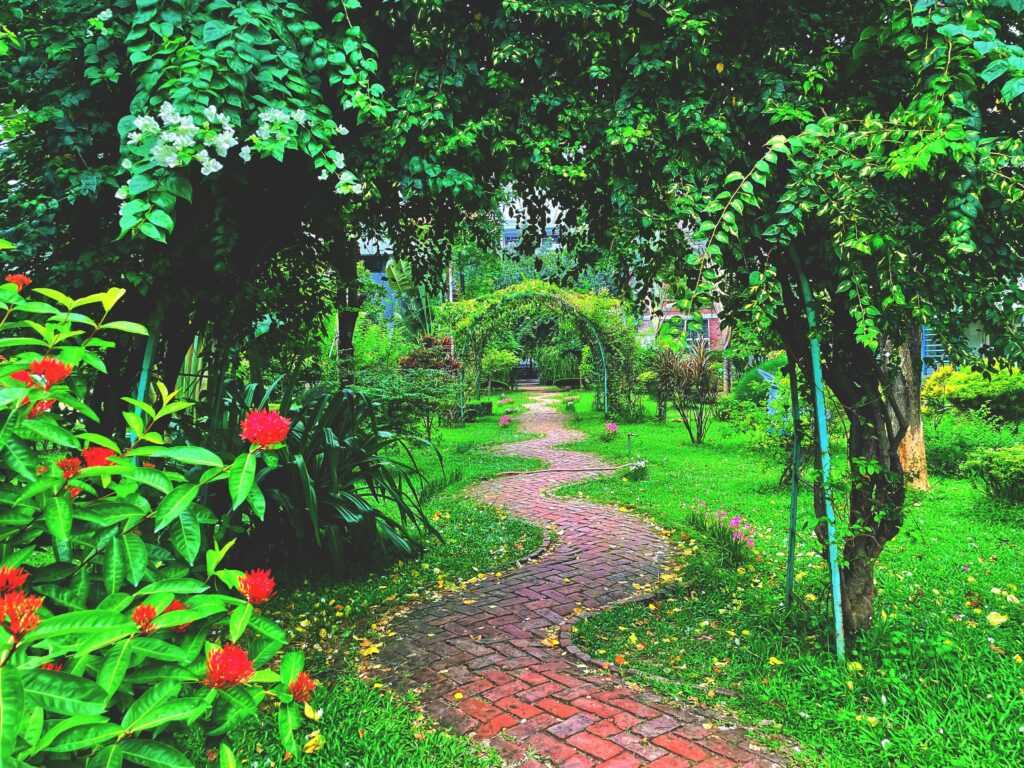
What pulls it all together is shape. Alternate angles, sizes, and color tones to guide the eye and create flow. A path that feels natural still needs intention. Avoid straight lines; trust the curve. Let irregular stones lead the way.
Need more walkway inspiration? Check out these natural pathway ideas.
Wood Elements That Age Gracefully
Wooden paths bring organic charm and quiet warmth to any garden. Reclaimed timber planks or log slices are especially striking, lending that ‘cabin in the woods’ feel with minimal effort. Their imperfections tell a story knots, grain, and wear only deepen their appeal over time. Whether laid in a straight line or set irregularly through grass or mulch, these materials create cozy, grounded walkways.
But nature doesn’t go easy on wood. To keep wooden paths looking good and functioning well, sealing is non negotiable. Use a high quality outdoor wood sealant with UV protection and water resistance. Apply it annually, and make sure your boards have airflow underneath direct ground contact is a fast track to rot. For log slices, consider a gravel or sand bed to allow drainage while keeping them steady.
Traction matters too. Option one: add texture with a wire brush before sealing. Option two: mix fine grit into your sealant. Smooth wood gets slick, fast, especially after rain, so don’t skip this step. And always slope paths slightly away from foot traffic zones to keep water moving off the surface.
Wood needs a bit more care than stone or gravel, but for atmosphere, it’s hard to beat. Just build it right, maintain it simply, and let the wood do what it does best age with grace.
Living Pathways with Ground Covers
If a stone path feels too rigid, softening the way underfoot might be the answer. Creeping thyme, moss, and clover are not just decorative touches they’re functional, low growing ground covers that can handle occasional foot traffic while adding life to your garden. Each has its own character: thyme brings a subtle fragrance, moss loves shade and stays lush, and clover handles sun, fixes nitrogen, and fills in fast.
Beyond their beauty, these plants work double duty. They reduce erosion, support insect biodiversity, and keep soil temperatures more stable. Pollinators love them, and so do bare feet. Maintenance is easy less mowing, fewer chemicals, more green.
To boost durability and structure, pair these living elements with pavers or stepping stones. The contrast not only looks sharp but also guides the feet and gives the eye a break. Gravel can help frame the space and improve drainage. It’s nature doing most of the heavy lifting, with just a bit of design know how to pull it all together.
Gravel and Decomposed Granite for Flexibility
If you’re looking for a garden path solution that checks both the budget and simplicity boxes, gravel or decomposed granite is hard to beat. These materials are affordable, widely available, and can be installed without heavy equipment or specialized skills. Lay down a weed barrier, pour the material, level it out, and you’re in business. Most weekend warriors can knock it out in a day.
One of the biggest perks? Drainage. Unlike concrete or stone, gravel doesn’t trap water it lets it pass through. That makes it especially useful in rainy climates or areas that deal with backyard puddling. It won’t solve every flood issue, but it helps your path stay dry, usable, and low maintenance.
To keep gravel paths tidy, edging is a must. Use metal, wood, or even brick to frame the edges. This does more than just look clean it keeps the gravel from spilling into your lawn or flower beds over time. Keep the borders a couple of inches higher than the path to contain run off, and refresh the gravel layer annually to keep everything looking sharp and walkable.
Combining Textures for a Custom Feel
Mixed material garden paths don’t just look great they feel intentional. Pairing stone with grass or wood with gravel adds contrast and character, but there’s a balance to strike between variety and visual clutter. The trick is staying grounded in purpose. Each shift in material should make sense use gravel at tighter curves, widen sections with stone for gathering spots, thread groundcover between planks for softness.
Scale matters. Oversized flagstones in a small garden feel heavy; skinny wood strips in a wide path can look underbuilt. Layout should lead the eye naturally use repetition and rhythm to create flow. And don’t forget the backdrop. Gravel looks great in Mediterranean style spaces; moss covered logs belong in shaded woodland gardens. Let the materials echo what’s already in your landscape. This isn’t about throwing in everything it’s about editing, tuning, and fitting materials like puzzle pieces into the story your garden is already telling.
Get Inspired and Start Planning
Designing a garden path isn’t just about looks it’s about how it feels, sounds, and even smells. Crushed gravel underfoot offers a satisfying crunch. Moss brings softness and a subtle, earthy scent after rain. A few strategically placed herbs along the path’s edge like lavender or thyme can add deep sensory cues that pull you into the space. Small touches like these make a path more than a walkway; they make it an experience.
You don’t need to overhaul your whole garden to get started. A short winding path between the porch and a planter bed, or a stepping stone trail to your compost bin, can be a solid first project. Many of these ideas take a single weekend to knock out.
Looking for more inspiration and how tos? Check out these natural pathway ideas tailored to different spaces, budgets, and vibes.
 Zoryna Xelthanna has opinions about diy renovation ideas. Informed ones, backed by real experience — but opinions nonetheless, and they doesn't try to disguise them as neutral observation. They thinks a lot of what gets written about DIY Renovation Ideas, Gardening and Landscaping Tips, Home Repair Tips is either too cautious to be useful or too confident to be credible, and they's work tends to sit deliberately in the space between those two failure modes.
Reading Zoryna's pieces, you get the sense of someone who has thought about this stuff seriously and arrived at actual conclusions — not just collected a range of perspectives and declined to pick one. That can be uncomfortable when they lands on something you disagree with. It's also why the writing is worth engaging with. Zoryna isn't interested in telling people what they want to hear. They is interested in telling them what they actually thinks, with enough reasoning behind it that you can push back if you want to. That kind of intellectual honesty is rarer than it should be.
What Zoryna is best at is the moment when a familiar topic reveals something unexpected — when the conventional wisdom turns out to be slightly off, or when a small shift in framing changes everything. They finds those moments consistently, which is why they's work tends to generate real discussion rather than just passive agreement.
Zoryna Xelthanna has opinions about diy renovation ideas. Informed ones, backed by real experience — but opinions nonetheless, and they doesn't try to disguise them as neutral observation. They thinks a lot of what gets written about DIY Renovation Ideas, Gardening and Landscaping Tips, Home Repair Tips is either too cautious to be useful or too confident to be credible, and they's work tends to sit deliberately in the space between those two failure modes.
Reading Zoryna's pieces, you get the sense of someone who has thought about this stuff seriously and arrived at actual conclusions — not just collected a range of perspectives and declined to pick one. That can be uncomfortable when they lands on something you disagree with. It's also why the writing is worth engaging with. Zoryna isn't interested in telling people what they want to hear. They is interested in telling them what they actually thinks, with enough reasoning behind it that you can push back if you want to. That kind of intellectual honesty is rarer than it should be.
What Zoryna is best at is the moment when a familiar topic reveals something unexpected — when the conventional wisdom turns out to be slightly off, or when a small shift in framing changes everything. They finds those moments consistently, which is why they's work tends to generate real discussion rather than just passive agreement.