
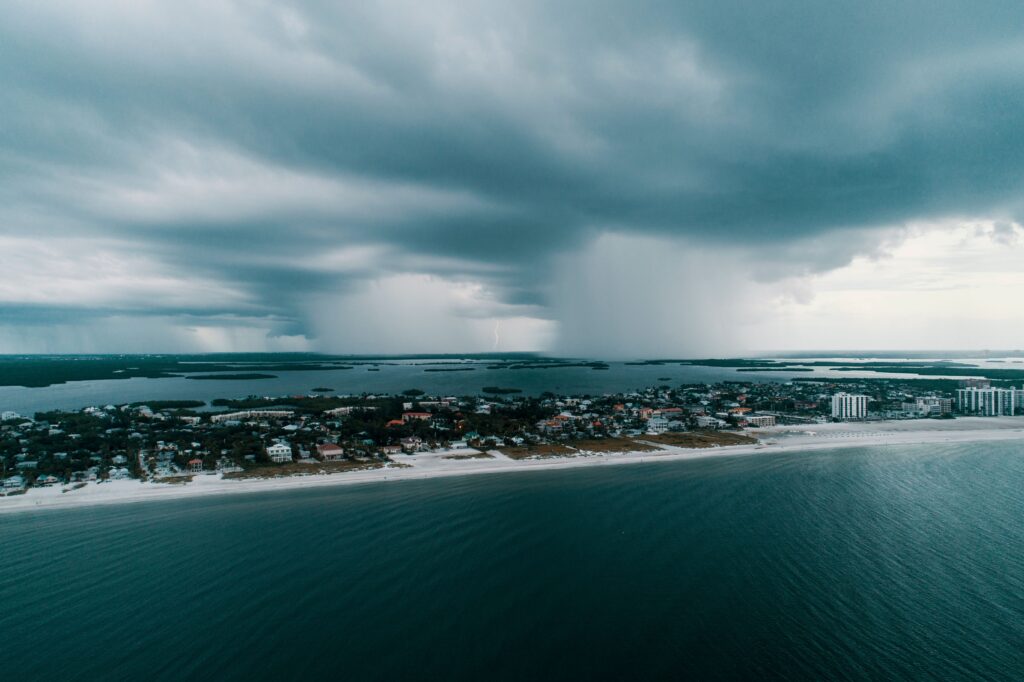
Coastal homeowners face a harsh reality every hurricane season. Extreme weather events are becoming more frequent and intense, bringing physical forces that threaten entire communities. When a major storm approaches, the immediate reaction is often to rush to the hardware store, buy thick sheets of wood, and nail them over the windows.
This reaction makes sense historically. Wood boards have been the standard storm preparation method for decades. However, extreme weather has outpaced this outdated defense strategy. According to the National Oceanic and Atmospheric Administration, Category 5 storms have the fastest wind speeds at 157 mph or higher.
While plywood has been a historical go-to for storm prep, it completely fails modern structural standards and puts your family and home at severe risk. Standard wooden sheets simply cannot withstand the immense pressure of these modern superstorms.
Category 5 Winds vs. Plywood
A Category 5 storm is a massive, highly pressurized system that exerts incredible physical force against flat surfaces. When sustained winds reach 157 mph, accompanied by even stronger sudden gusts, the pressure pushing against your home’s exterior walls is immense. Standard 5/8-inch plywood was never engineered to handle this level of sustained environmental stress.
Wood is a rigid material with specific breaking points. When subjected to extreme hurricane forces, these boards warp, splinter, and detach from their mounts. In fact, plywood systems routinely fail at wind speeds of 110-130 mph according to Florida Building Code testing protocols. This means that long before a storm reaches peak Category 5 intensity, traditional window coverings are already blowing away.
Because Category 5 winds easily surpass the failure point of traditional wood boards, relying on outdated methods puts your home’s entire structural integrity at risk. Fortunately, modern hurricane protection has advanced well beyond plywood, with lightweight, rigorously tested screen systems that exceed Florida Building Code standards and can be deployed quickly without heavy equipment or professional installation.
Understanding Building Envelope Integrity
To understand why a blown-off piece of plywood is so dangerous, you need to understand the concept of the “building envelope.” The building envelope is simply the physical separator between the conditioned interior of your home and the unconditioned outdoor environment. It includes your roof, walls, doors, and windows.
When your building envelope is completely sealed, the wind flows over and around your house. If a window breaks during a storm, that seal is violently broken. Wind rushes into the living room, but it has nowhere to exit.
This creates what engineers call the “balloon effect.” The wind rapidly increases the internal air pressure inside your house, pushing outward against the walls and upward against the ceiling. The results are scientifically documented and structurally devastating. Research shows that an opening on the windward wall of a building of only 5% allows full internal pressurization, doubling the pressures acting to lift the roof.
Because plywood is heavy and rigid, it does not slowly peel away. It tends to snap or blow off entirely in one sudden motion. This guarantees an immediate, violent breach of your building envelope at the worst possible moment.
Failed Window Protection
The danger of a compromised building envelope goes far beyond the wind itself. When window protection fails, you expose the interior of your home to a toxic mix of torrential water intrusion and flying debris. Structural engineers refer to this debris as “large missile impacts,” which can include anything from heavy tree branches to your neighbor’s patio furniture flying through the air.
Once water enters the home, the financial damage multiplies instantly. Drywall becomes saturated, electrical systems short out, and mold begins growing within hours. The National Hurricane Center explicitly notes that 40-60% of hurricane property damage results from failed window and door openings allowing wind and water entry.
Makeshift DIY plywood jobs offer a false sense of security against these terrifying statistics. Homeowners often believe that because their windows are covered, they are safe from financial and physical ruin. The reality is that improperly secured, rigid wood boards are often the first things to fail when a severe storm makes landfall.
Moving Past Wood
The structural engineering industry has moved far past traditional wood boards. The modern, code-approved solution to storm preparation is the use of flexible, engineered hurricane screens. These systems solve both the scientific vulnerabilities and the practical headaches of old-school methods.
Modern screens are made from lightweight, high-strength fabric systems engineered for “nondestructive wind flow.” Instead of acting as a rigid, immovable wall like wood, these fabrics are slightly porous. They successfully deflect heavy flying debris while slowly bleeding off wind pressure.
This flexible design prevents the screens from snapping or blowing away. High-quality fabric systems are guaranteed to withstand sustained winds of up to 188 mph. This easily surpasses Category 5 wind thresholds and ensures your building envelope remains perfectly intact.
To see how these systems compare to outdated methods, review the comparison table below.
| Feature | Traditional Plywood | Fabric Hurricane Screens |
|---|---|---|
| Wind Resistance (MPH) | Fails at 110-130 mph | Withstands up to 188 mph |
| Weight / Deployment Speed | Heavy, requires multiple people | Lightweight, easy single-person setup |
| Visibility & Natural Light | Total darkness, claustrophobic | Translucent, allows natural light in |
| Storage Space | Bulky, takes up garage space | Folds compactly into small bags |
Building Codes and Insurance Perks
Modern building codes recognize the severe limitations of rigid wood boards. The Florida Building Code now demands strict large missile impact testing for window protection systems. Engineers quite literally fire heavy wooden two-by-fours out of an air cannon at high speeds to test the material’s strength. Traditional plywood routinely fails these stringent tests, while engineered fabric screens easily pass them.
Upgrading to these highly tested systems does not have to be complicated. Modern screen systems offer flexible installation options. You can choose DIY kits to save on labor costs or work with professional dealer networks for a hands-off installation experience.
Most importantly, there is a distinct financial return on investment. Insurance companies understand the science of building envelope integrity. By installing these code-approved wind abatement systems, you can easily qualify for significant wind mitigation insurance premium discounts. Protecting your home the right way often ends up paying for itself over time.
Conclusion
Preparing for a Category 5 storm requires trusting science and modern engineering over outdated habits. Plywood is an archaic, risky, and physically exhausting method that routinely fails under the pressure of extreme wind. Continuing to rely on it means risking a catastrophic breach of your building envelope, which can lead to severe structural damage and devastating water intrusion.
You deserve the peace of mind that comes with knowing your home is truly secure. Protecting your building envelope with engineered, transparent, and lightweight materials removes the heavy lifting and the claustrophobia from your storm preparation routine.
 Ask Ireneia Diamondolls how they got into home repair tips and you'll probably get a longer answer than you expected. The short version: Ireneia started doing it, got genuinely hooked, and at some point realized they had accumulated enough hard-won knowledge that it would be a waste not to share it. So they started writing.
What makes Ireneia worth reading is that they skips the obvious stuff. Nobody needs another surface-level take on Home Repair Tips, Creative Concepts, DIY Renovation Ideas. What readers actually want is the nuance — the part that only becomes clear after you've made a few mistakes and figured out why. That's the territory Ireneia operates in. The writing is direct, occasionally blunt, and always built around what's actually true rather than what sounds good in an article. They has little patience for filler, which means they's pieces tend to be denser with real information than the average post on the same subject.
Ireneia doesn't write to impress anyone. They writes because they has things to say that they genuinely thinks people should hear. That motivation — basic as it sounds — produces something noticeably different from content written for clicks or word count. Readers pick up on it. The comments on Ireneia's work tend to reflect that.
Ask Ireneia Diamondolls how they got into home repair tips and you'll probably get a longer answer than you expected. The short version: Ireneia started doing it, got genuinely hooked, and at some point realized they had accumulated enough hard-won knowledge that it would be a waste not to share it. So they started writing.
What makes Ireneia worth reading is that they skips the obvious stuff. Nobody needs another surface-level take on Home Repair Tips, Creative Concepts, DIY Renovation Ideas. What readers actually want is the nuance — the part that only becomes clear after you've made a few mistakes and figured out why. That's the territory Ireneia operates in. The writing is direct, occasionally blunt, and always built around what's actually true rather than what sounds good in an article. They has little patience for filler, which means they's pieces tend to be denser with real information than the average post on the same subject.
Ireneia doesn't write to impress anyone. They writes because they has things to say that they genuinely thinks people should hear. That motivation — basic as it sounds — produces something noticeably different from content written for clicks or word count. Readers pick up on it. The comments on Ireneia's work tend to reflect that.