
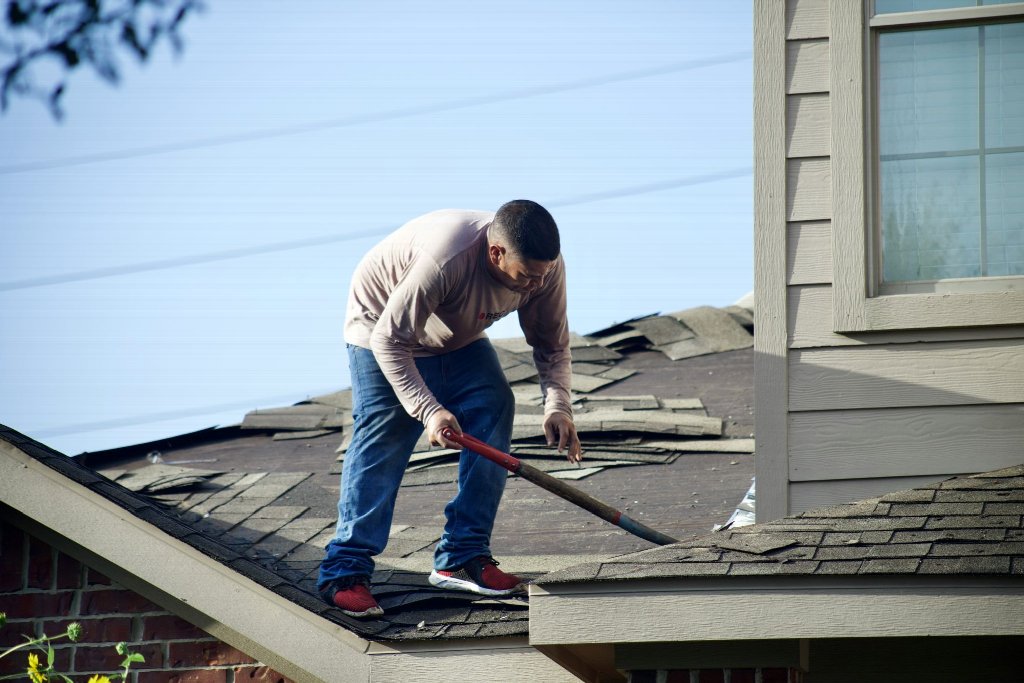
The roof is the part of a home that most homeowners think about least and that costs the most when something goes wrong. It sits out of sight and largely out of mind across years of ordinary weather, doing its job without generating any feedback about how well it’s managing until a problem has developed far enough to make itself impossible to ignore. By that point, what might have been a modest repair has frequently become a significant one.
The gap between when a roof problem starts and when it becomes visible inside the home is where most of the cost accumulates. Water that enters through a compromised flashing or a cracked tile doesn’t announce itself immediately. It finds a path through the roofing system and the building structure, creating conditions for rot, mould, and progressive structural damage across weeks or months before anyone inside the house notices anything has changed. Understanding what to look for, and when to bring in a professional, is what closes that gap before it becomes expensive.
The Warning Signs Visible From the Ground
A useful roof assessment doesn’t require getting on the roof. A significant proportion of the indicators that something is wrong are visible from the ground with nothing more than careful observation and, in some cases, a pair of binoculars.
Missing, cracked, or visibly displaced tiles are the most obvious indicators. A tile that has slipped out of position, cracked under impact or thermal stress, or gone missing entirely creates an opening in the roof covering that allows water entry under the conditions that roofing is supposed to prevent. These are visible from the street in most cases and represent a clear trigger for professional assessment regardless of whether any internal symptoms have appeared yet.
Sagging roofline is a more serious indicator. A roofline that was straight and is now visibly curved or depressed suggests that the structural elements beneath the covering are compromised, either through moisture damage, pest activity, or the progressive failure of roofing timbers under load. This is not a cosmetic issue and is not one that improves without intervention.
Moss and lichen growth on the roof surface is an indicator that moisture is being retained in the roofing material rather than draining as it should. Beyond the aesthetic dimension, sustained moisture retention in roofing tiles and the materials beneath them accelerates deterioration and creates conditions for the kind of progressive damage that a dry roof doesn’t experience at the same rate.
Gutters and downpipes that are visibly blocked, sagging, or separating from the fascia indicate that the drainage function of the roof system is compromised. Water that can’t drain efficiently pools behind blocked gutters, saturates the fascia and soffit behind them, and in sustained rain events overflows in directions that create water entry risk at the junction between the roof and the wall.
What a Professional Inspection Actually Covers
A professional roof inspection covers dimensions of the roof’s condition that aren’t accessible from ground-level observation, and the value of the inspection is in identifying developing problems before they produce the internal symptoms that make them undeniable.
A qualified roofer assesses the condition of the roof covering across its full surface, including areas that aren’t visible from the street and that a homeowner’s ground-level observation doesn’t reach. Individual tiles are checked for cracking, porosity, and displacement. The pointing and bedding that holds ridge and hip tiles in position is assessed for deterioration that reduces its adhesion and creates the conditions under which tiles move or detach.
Flashing condition is a central part of any professional assessment. Flashings seal the vulnerable junctions where the roof covering meets walls, chimneys, skylights, and other penetrations. These are the points where water most commonly enters a roof system when the flashing has corroded, lifted, or cracked, and their condition is difficult to assess accurately without getting close enough to examine the material and its adhesion to the adjoining surfaces.
For homeowners in Victoria wanting a thorough assessment of their roof’s condition, engaging roofing services in Melbourne from a licensed and experienced roofing contractor produces an inspection that covers all of these elements and provides a clear picture of what requires immediate attention and what can be monitored across the coming season.
The inspection also covers the roof structure where it’s accessible, looking for evidence of moisture penetration in the roofing timbers, signs of pest activity that may be compromising structural integrity, and the condition of sarking and insulation beneath the roof covering. This structural dimension of the assessment isn’t visible from outside the roof and isn’t something a homeowner can assess without professional knowledge of what the signs of compromise look like before they become obvious failures.
The Roof Problems That Cannot Wait
Most roof maintenance can be scheduled at a convenient time, but certain conditions require urgent attention rather than a place in the queue for the next available inspection.
Active water entry into the living space is the clearest indicator of urgency. Water appearing on ceilings or running down walls during or after rain indicates that the roof system has been breached and that water is following a path through the building structure that will cause progressive damage for as long as the breach remains. Temporary measures to contain the internal water damage are appropriate while professional attention is being arranged, but the roof itself requires urgent inspection and repair rather than monitoring.
Storm damage that has visibly displaced or removed roofing material creates an immediate vulnerability that subsequent rain will exploit. Missing tiles, lifted flashing, and debris impact damage all create openings that are much easier and less expensive to address promptly than after a subsequent rain event has extended the water damage through the roof structure and into the building fabric.
Visible sagging or movement in the roof structure, particularly if it has developed or worsened quickly, indicates a structural situation that requires professional assessment as a priority rather than a routine inspection. Structural deterioration that is progressing actively is not a problem that stabilises without intervention.
Why Regular Inspection Is the Better Financial Decision
The financial case for regular professional roof inspection is straightforward when the cost of an inspection is compared to the cost of the repair that the inspection prevents. A flashing that needs resealing is a modest cost. The same flashing left until the water damage it’s allowing to develop has reached the ceiling linings, wall framing, and insulation is a considerably larger one. The inspection doesn’t prevent the flashing from deteriorating. It identifies the deterioration at the point where addressing it is still inexpensive.
Most roofing professionals recommend an inspection every one to two years for roofs that are more than ten years old, and after any significant storm event regardless of age. The roof that is inspected on this schedule is a roof whose problems are identified and addressed while they’re still small. The one that’s only looked at when symptoms appear inside the home is a roof whose problems have been developing for long enough to produce those symptoms, which is the most expensive point at which to address them.
 Patricko Aaronickson has opinions about home maintenance essentials. Informed ones, backed by real experience — but opinions nonetheless, and they doesn't try to disguise them as neutral observation. They thinks a lot of what gets written about Home Maintenance Essentials, Home Repair Tips, Interior Design Inspirations is either too cautious to be useful or too confident to be credible, and they's work tends to sit deliberately in the space between those two failure modes.
Reading Patricko's pieces, you get the sense of someone who has thought about this stuff seriously and arrived at actual conclusions — not just collected a range of perspectives and declined to pick one. That can be uncomfortable when they lands on something you disagree with. It's also why the writing is worth engaging with. Patricko isn't interested in telling people what they want to hear. They is interested in telling them what they actually thinks, with enough reasoning behind it that you can push back if you want to. That kind of intellectual honesty is rarer than it should be.
What Patricko is best at is the moment when a familiar topic reveals something unexpected — when the conventional wisdom turns out to be slightly off, or when a small shift in framing changes everything. They finds those moments consistently, which is why they's work tends to generate real discussion rather than just passive agreement.
Patricko Aaronickson has opinions about home maintenance essentials. Informed ones, backed by real experience — but opinions nonetheless, and they doesn't try to disguise them as neutral observation. They thinks a lot of what gets written about Home Maintenance Essentials, Home Repair Tips, Interior Design Inspirations is either too cautious to be useful or too confident to be credible, and they's work tends to sit deliberately in the space between those two failure modes.
Reading Patricko's pieces, you get the sense of someone who has thought about this stuff seriously and arrived at actual conclusions — not just collected a range of perspectives and declined to pick one. That can be uncomfortable when they lands on something you disagree with. It's also why the writing is worth engaging with. Patricko isn't interested in telling people what they want to hear. They is interested in telling them what they actually thinks, with enough reasoning behind it that you can push back if you want to. That kind of intellectual honesty is rarer than it should be.
What Patricko is best at is the moment when a familiar topic reveals something unexpected — when the conventional wisdom turns out to be slightly off, or when a small shift in framing changes everything. They finds those moments consistently, which is why they's work tends to generate real discussion rather than just passive agreement.